
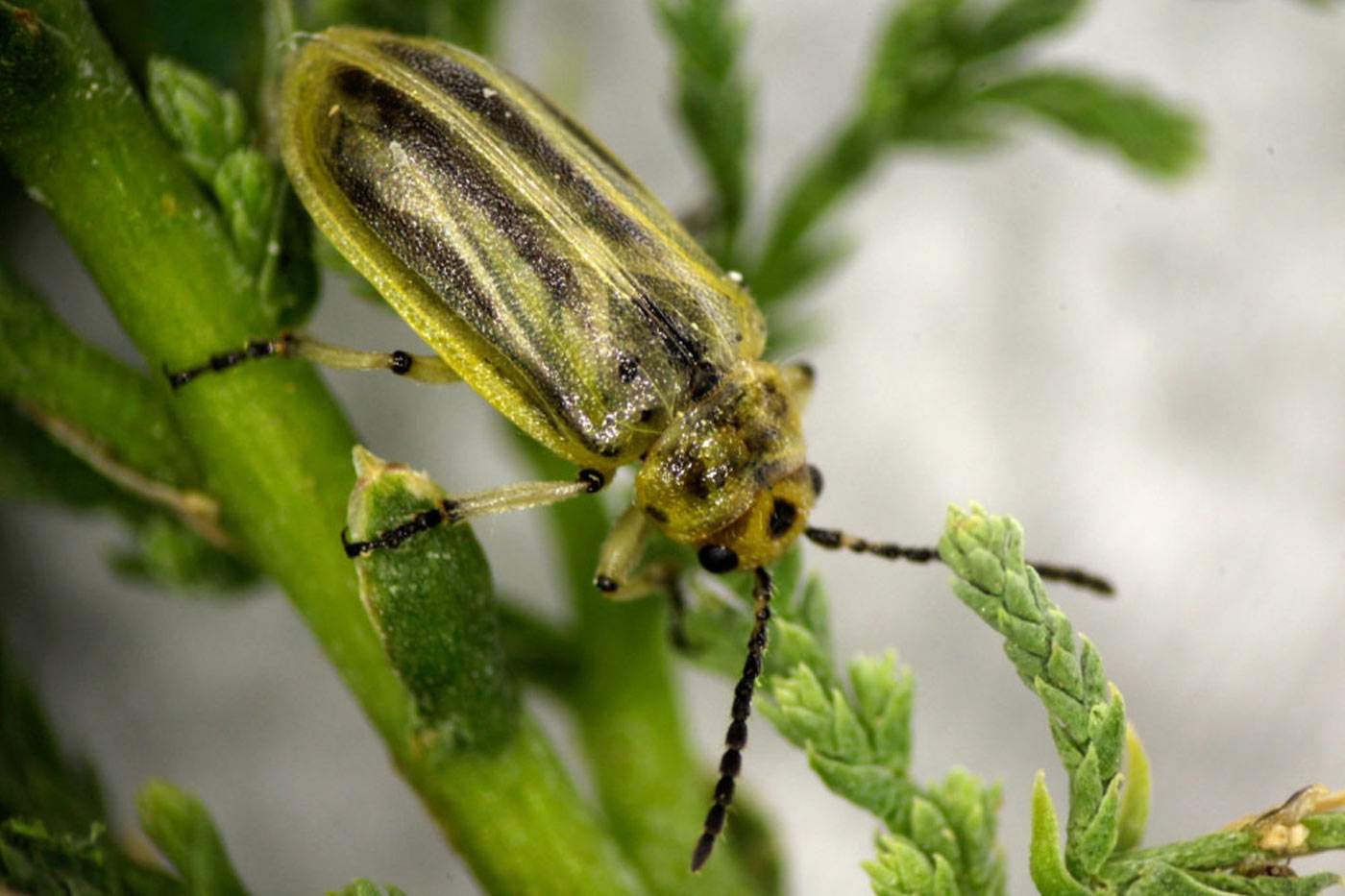
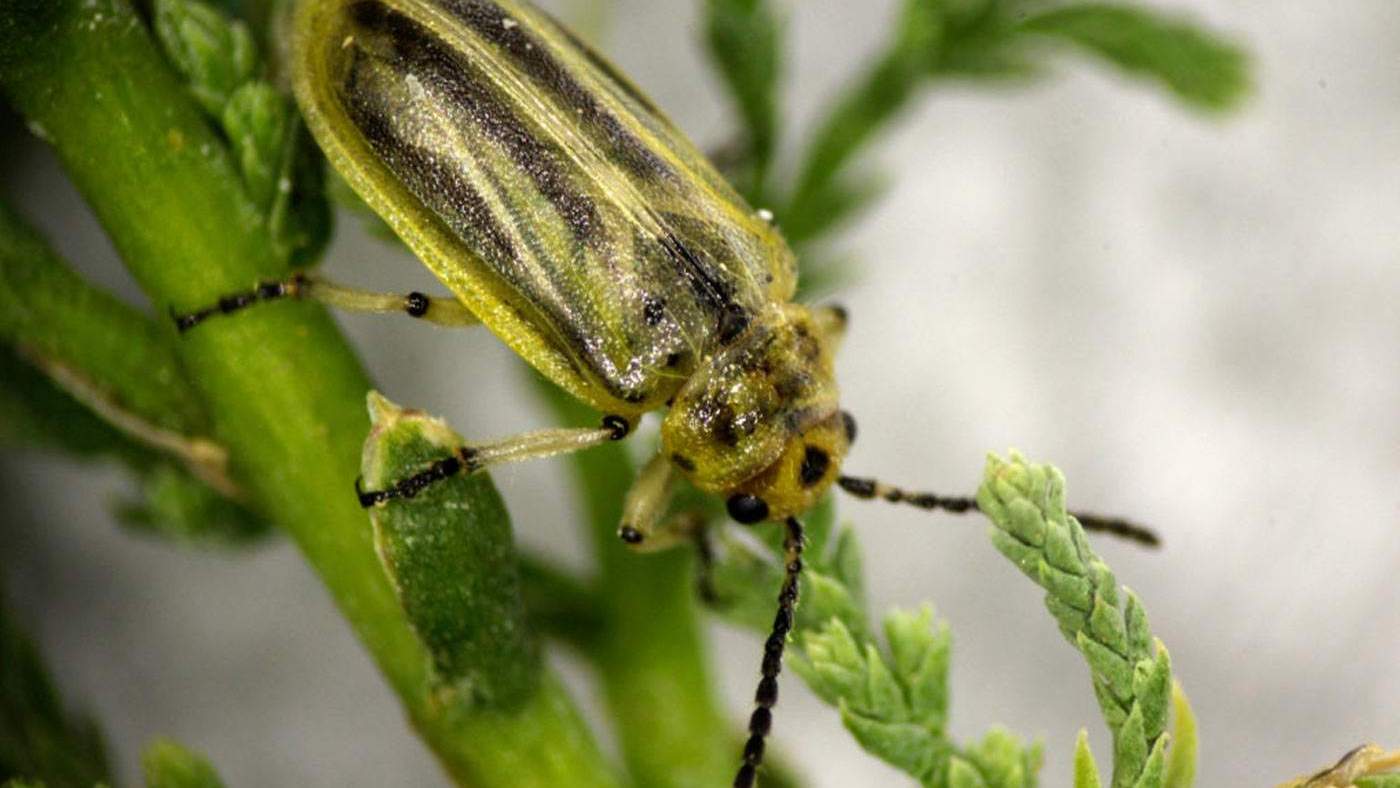
Tamarisk Beetle Map Update
Since 2007, RiversEdge West West’s Annual Tamarisk Beetle Map has tracked the spread of tamarisk beetles (Diorhabda spp.) across the Southwest. Built with observations from researchers, land managers, and community scientists, the map became an important tool for understanding beetle expansion, supporting restoration planning, and advancing biological control research.
Today, tamarisk beetles are now well-established throughout much of the region. Because of this, the map is no longer capturing new areas of spread in the same way it once did. At the same time, many of the questions researchers and land managers are now asking, such as changes in beetle population, hybridization between subspecies, and localized vegetation impacts, require more detailed monitoring than the map was designed to provide.
For these reasons, the 2025 Tamarisk Beetle Map will be our final annual release for the time being.
The good news is that this does not mark the end of RiversEdge West’s tamarisk beetle work. Our online resources, workshops, conference sessions, and education and outreach efforts will all continue. The full map archive, containing more than 16,000 observations collected between 2007 and 2025, will also remain publicly available as an important educational and historical resource.
Community observations still matter. Tamarisk beetle data can continue to be submitted through iNaturalist, CitSci, or by email at tamariskbeetledata@riversedgewest.org. We will continue tracking developments and may revisit future mapping efforts if new needs emerge.
While the annual map is paused, RiversEdge West will continue to support tamarisk beetle education and information sharing through workshops, conference sessions, online resources, and outreach. As a reminder, our Riparian Restoration Conference now alternates with workshop series hosted across the Southwest. Planning for the 2027 Workshop Series begins this summer.
Thank you to the hundreds of partners, researchers, and community scientists who contributed to this project over the years. Together, you helped create one of the most unique landscape-scale biological control monitoring efforts in the Southwest and expanded public understanding of invasive species management, river restoration, and riparian health.