
Improving Riverside Habitat along the Riverfront Trail at Dos Rios
Grand Junction, CO – RiversEdge West is continuing restoration efforts along the Colorado River in Grand Junction, with conservation crews working August 10–14 and September 8–11. This project is a collaborative effort between RiversEdge West, the City of Grand Junction, and Western Colorado Conservation Corps to restore native riverside habitat along the Riverfront Trail and adjacent island near the Confluence Center of Colorado and the Dos Rios development.
Why: The Colorado River is vital to the Grand Junction community—socially, economically, and environmentally. Its riverside habitat provides food, shelter, and movement corridors for fish and wildlife while supporting agriculture, recreation, and the quality of life of our community. Restoring healthy native vegetation helps strengthen these ecological functions and build a more resilient river corridor.
What: Restoration crews will remove invasive plants, including tamarisk and Russian olive, and replant with a diverse mix of native trees, shrubs, and grasses. These invasive plants negatively impact river ecosystems by crowding out native species, reducing habitat diversity, increasing wildfire fuel loads, limiting access for recreation, and altering the structure and function of riverside ecosystems. Removing them is an important first step toward restoring a healthier, more diverse riparian community.
Where: Western Colorado Conservation Corps members will spend two weeks working along the Riverfront Trail and adjacent island near the Confluence Center of Colorado, RiversEdge West's new home.
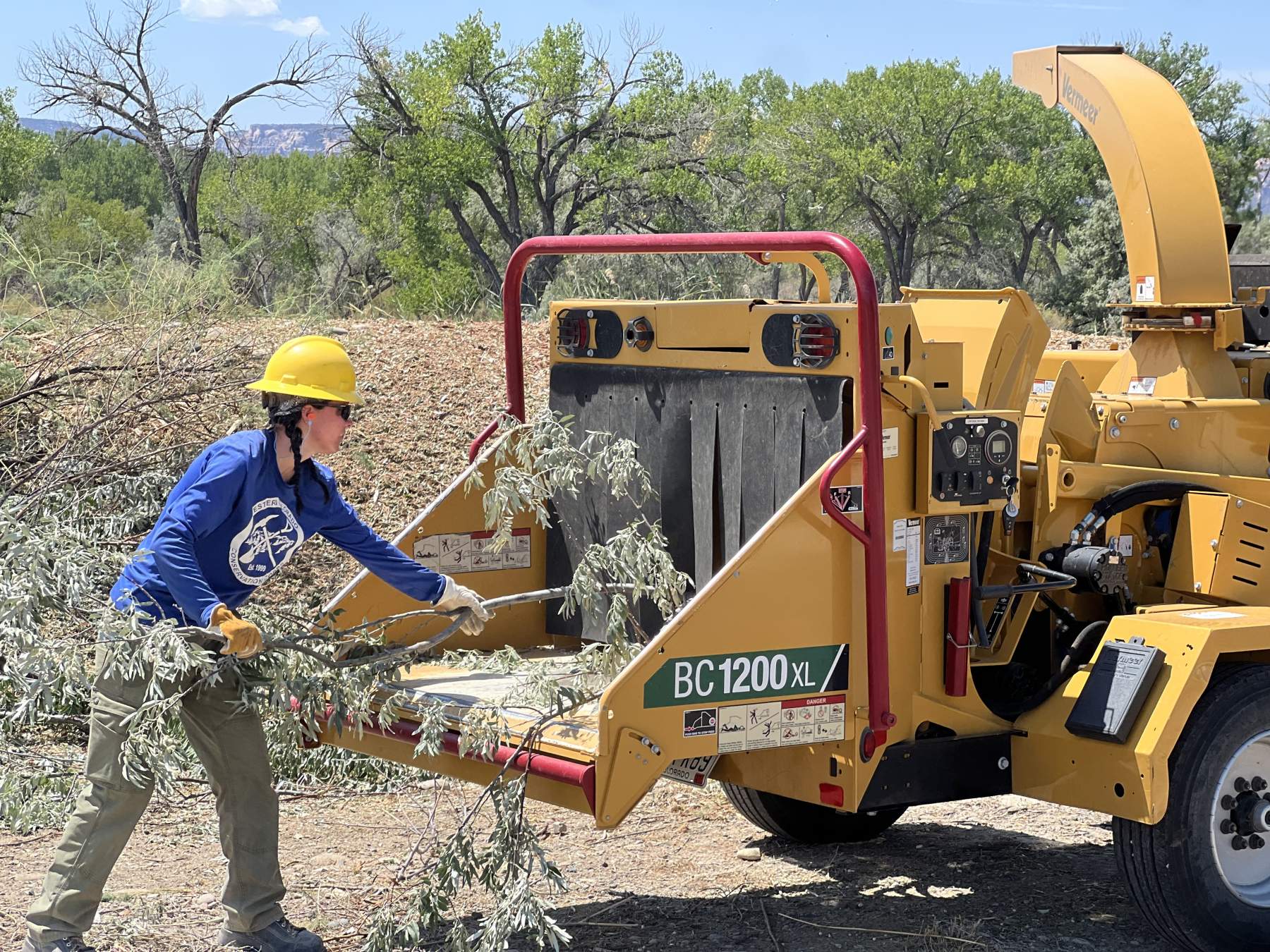
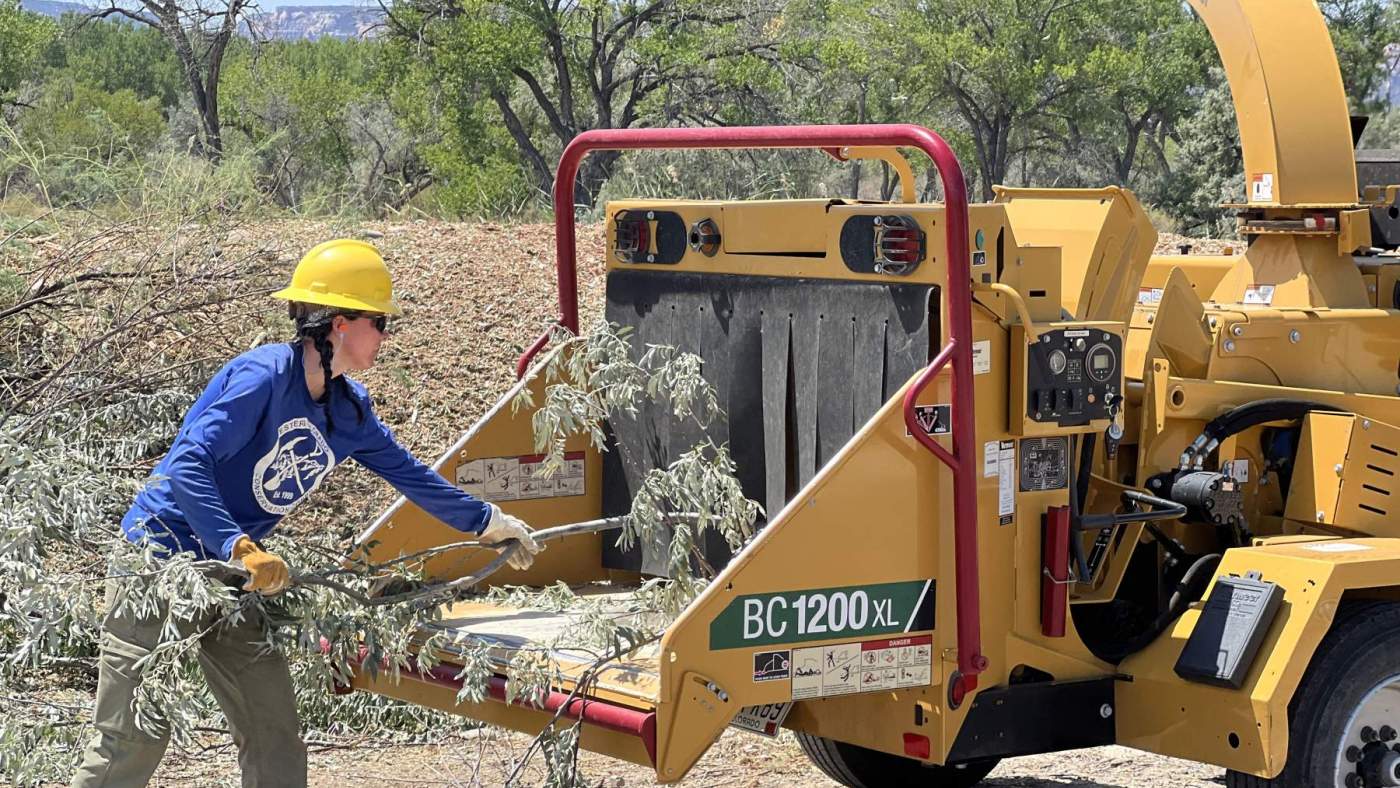
What to Expect: Restoration takes time, and the first stages don’t always look like the finished product. Removing decades of invasive vegetation can temporarily leave areas looking sparse, with piles of branches, disturbed soil, and equipment visible on site. Crews will be using chainsaws, operating loud equipment, and moving large amounts of woody material as they prepare the landscape for restoration.
While the work may look messy at first, this is an important part of the process. Healthy riverside habitat doesn’t grow overnight. After invasive vegetation is removed, crews and volunteers can begin establishing native plants that will grow, spread, and develop into a diverse riparian community over time. The result will be healthier habitat for wildlife, greater ecological diversity, and a more resilient Colorado River corridor.
We appreciate the community’s patience as this work gets underway and look forward to watching the landscape, and the habitat, recover over the seasons ahead.
How: RiversEdge West is leading this restoration effort in partnership with the City of Grand Junction and the Western Colorado Conservation Corps. RiversEdge West secured funding from the Laura Jane Musser Fund to make this work possible and is coordinating closely with the City to advance a shared vision for a healthier, more resilient Colorado River corridor. Together, partners are working to turn this restoration vision into on-the-ground improvements that will benefit the river and community for years to come.