
RiversEdge West Awarded $19,754 Grant to Advance Colorado Riverfront Restoration
[Grand Junction, CO – June 8, 2026] – RiversEdge West (REW) is thrilled to announce it has been awarded a $19,754 grant from the Colorado Watershed Assembly Healthy Rivers Fund to support the Colorado Riverfront Trail Restoration Project. This funding will help REW build on years of successful riparian restoration along the Colorado River by providing critical follow-up care, expanding native revegetation, and engaging community members in hands-on stewardship at high-priority riverfront sites in Grand Junction and Fruita.
“Our rivers are healthiest when restoration is paired with long-term care and community stewardship,” said Cara Kukuraitis, REW’s Director of Development and Communications. “This support from the Colorado Watershed Assembly will help us protect the progress we’ve already made along the Colorado Riverfront Trail while giving community members more opportunities to be part of restoration in their own backyard.”
Funding will support several restoration and stewardship efforts along the Colorado Riverfront Trail corridor:
- Invasive Species Removal and Site Preparation: REW will coordinate targeted removal of invasive species, including tamarisk, Russian olive, kochia, and Russian knapweed, at priority riverfront sites. Staff will work with land managers, conservation corps crews, and volunteers to treat invasive vegetation and prepare sites for native revegetation.
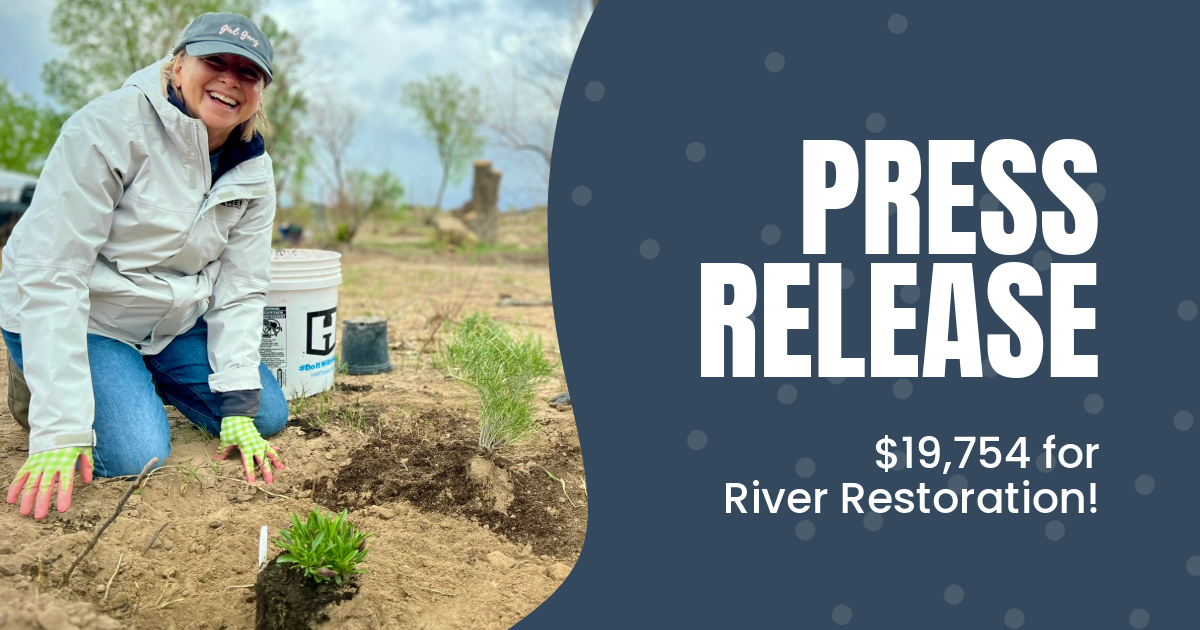
- Native Planting and Habitat Improvement: REW will plant 150–250 native trees and shrubs, protect young cottonwoods, and disperse locally adapted native seed mixes using seedball techniques. Supplemental watering and site checks will help improve plant survival during establishment and support healthier, more diverse riparian habitat for birds, pollinators, and other wildlife.
- Volunteer Stewardship: REW will lead 10–12 volunteer restoration events during the 2026 and 2027 field seasons, engaging an estimated 150–200 community members in hands-on restoration. Volunteers will receive training in restoration techniques and participate in activities including invasive species removal, native planting, cottonwood protection, seedball dispersal, and supplemental watering.
- Dos Rios Demonstration Site: Located directly outside REW’s permanent home at the Confluence Center of Colorado, Dos Rios will be a key focus of restoration efforts. As the site is restored, it will serve as a highly visible demonstration of riparian restoration and an outdoor classroom for REW’s workshops, conferences, youth programs, and community events.
The project builds on significant restoration investments already made along the Colorado Riverfront Trail. Continued stewardship is essential to prevent invasive species from returning and to give young native plants the care they need to become established. Matching funds from the Laura Jane Musser Fund are also secured for portions of the broader corridor restoration work.
Since 2002, REW has helped restore more than 2,500 acres of riparian habitat throughout Western Colorado through invasive species removal, revegetation, monitoring, and community engagement. In 2025 alone, REW engaged 153 volunteers, planted more than 600 native plants, protected more than 100 cottonwoods, and produced and dispersed more than 800 native seedballs.
###
RiversEdge West is a Grand Junction-based 501 (c) 3 nonprofit dedicated to the restoration of riparian ecosystems through education, collaboration, and technical assistance. By protecting the quality and ecological integrity of riparian lands, REW promotes the economic, social, and cultural well-being of the communities it serves. For more information about RiversEdge West and its programs, visit www.riversedgewest.org.
Colorado Watershed Assembly is a trusted resource where individuals involved with local watershed organizations can go to find information and guidance to help build a constituency, including updates on policy changes and practical advice to help identify and implement projects. CWA supports watershed protection at the local level by emphasizing local control, local agenda-setting, and engaging local expertise. They grow the “water ethic” by engaging citizens in work to benefit their watershed as a way to grow local stewardship, understanding, and connection to the local resource.
The Colorado Healthy Rivers Fund, established in 2003, provides funding for on-the-ground projects that contribute to cleaner water, healthier wildlife habitat, and improved recreation throughout our State. The fund is administered by the Colorado Watershed Assembly in association with the Colorado Water Conservation Board and the Water Quality Control Division. The fund accepts donations year-round, here: DONATE NOW.